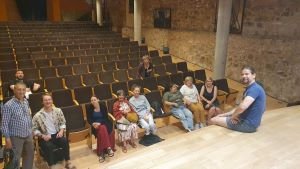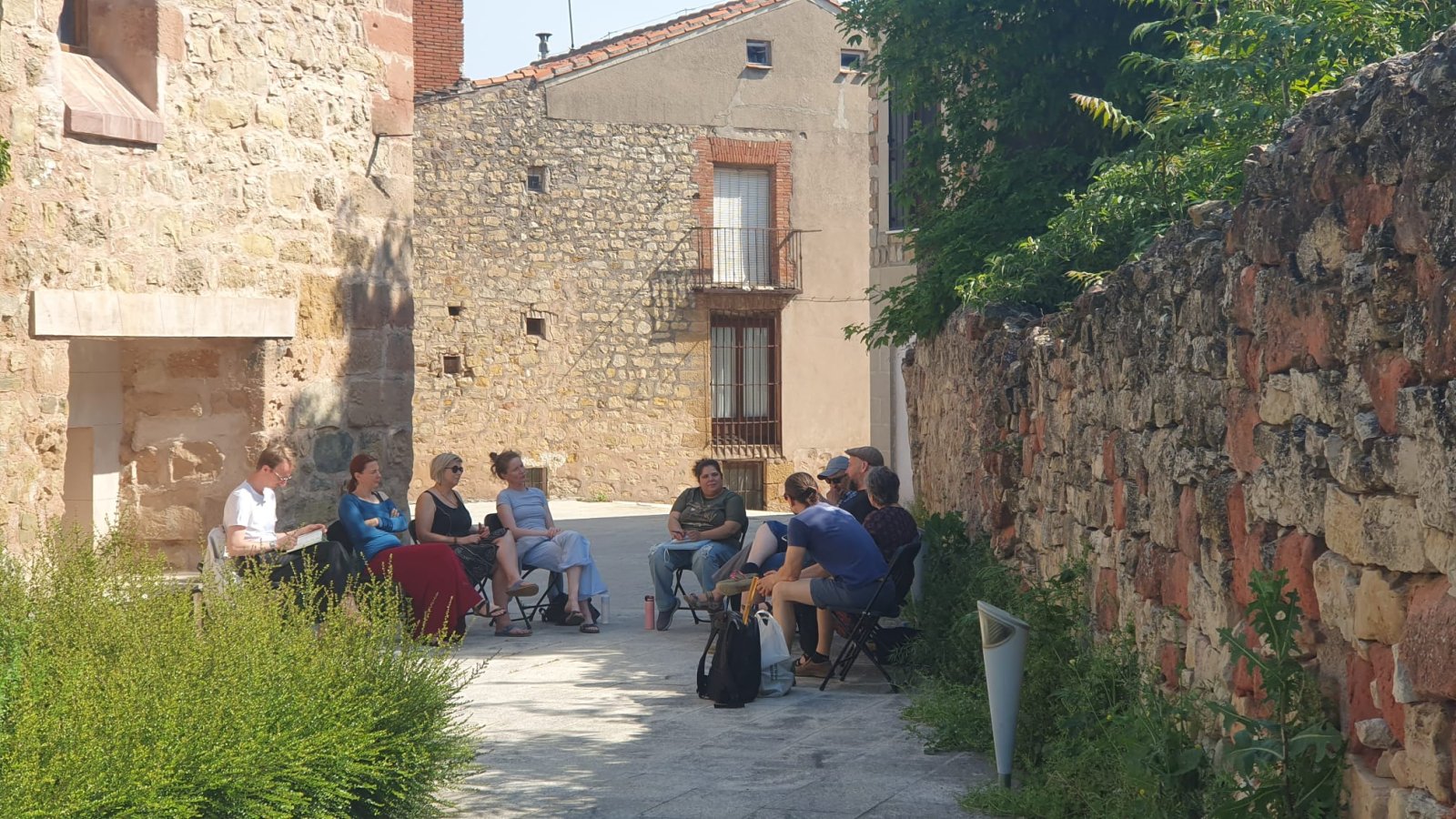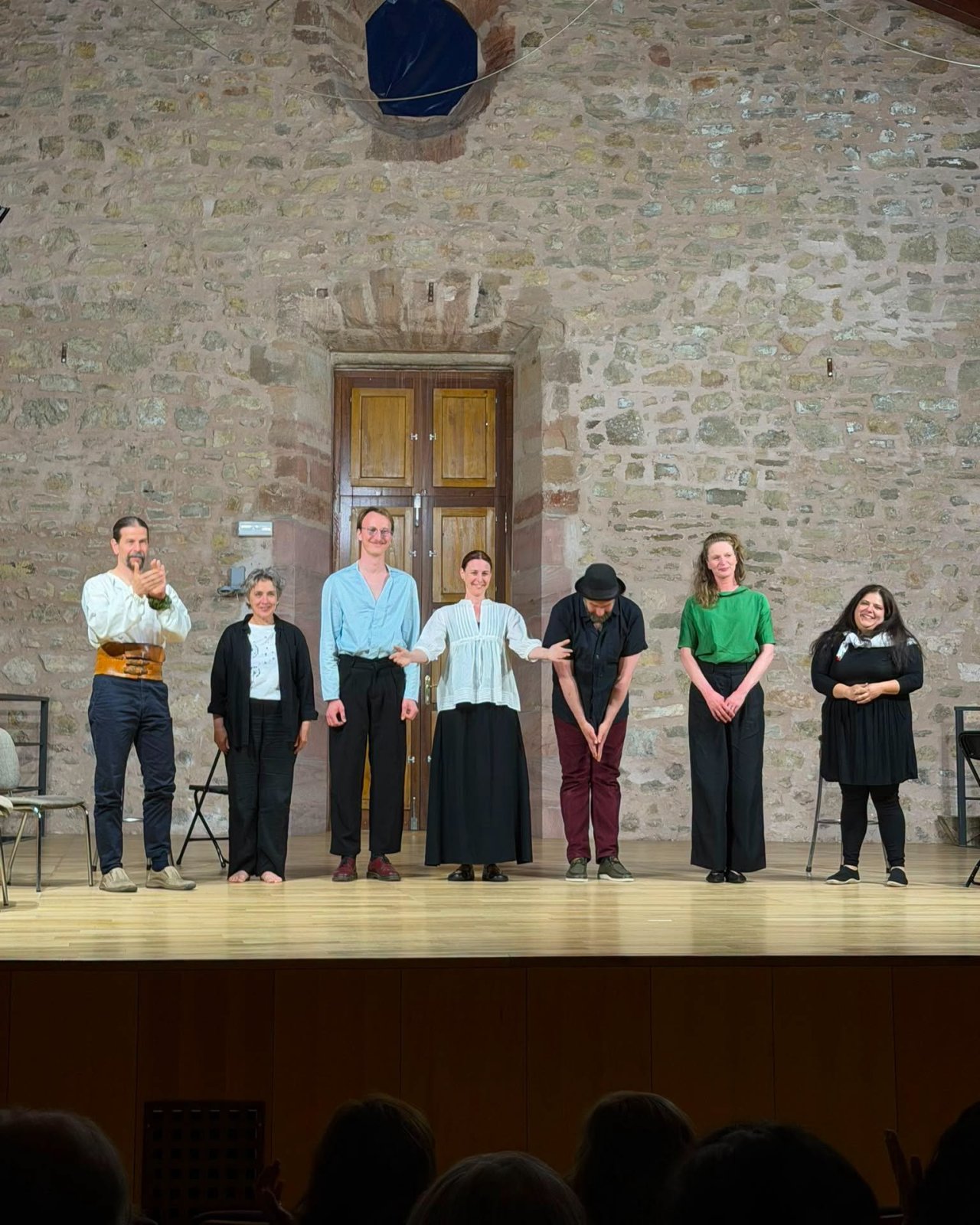
From 29 May to 10 June, the town of Sigüenza will host a creative residency for professionals from across Europe to exchange experiences, knowledge and stories, thereby promoting oral storytelling as a tradition.
This initiative forms part of the ‘Ancestor’ project, which aims to promote the EU’s oral heritage. It is led by the Guadalajara Seminar on Children’s and Young Adult Literature (SLIJ) – organiser of the Storytelling Marathon – in collaboration with four other cultural organisations from Italy, Slovakia, Latvia and Bulgaria, and has been selected under the Creative Europe programme.
The European Education and Culture Executive Agency (EACEA) selected this project from among 1,029 submissions; it is one of the 88 projects to be implemented under this call for proposals and the only one focusing on the theme of oral storytelling.
Blanca Calvo, the project director, has highlighted the richness of this project, which will bring together leading professionals in the ‘City of the Doncel’, creating a space for creativity, “resulting in a performance that helps to overcome language barriers and facilitates the exchange of oral heritage between EU countries, which will premiere on the Saturday of the Storytelling Marathon for us all to enjoy”.
Calvo emphasised that, whilst the tradition of oral storytelling dates back to time immemorial, “it remains in a constant process of innovation, and it is today’s new storytellers who will work in this space, exchanging experiences, stories and knowledge to enrich one another”.
Specifically, there are eight participating storytellers from Bulgaria, the Czech Republic, Estonia, Finland, Latvia, Poland, Slovakia and Slovenia. “Their work during this residency will contribute both to their professional development and to the equitable growth of the storytelling profession across the EU,” added Ana Viñas, manager of the Ancestor Project, who was present at Tuesday’s press conference to present these activities.
The director of the residency is Pepito Matéo, a renowned French storyteller who has previously collaborated with the SLIJ on creative projects
‘Places of Stories’ Meeting
Furthermore, from 10 to 12 June, in the days leading up to the Marathon, a ‘Places of Storytelling’ gathering will be held at the Palacio del Infantado in Guadalajara, with a total of 24 participants from 16 countries. The event will take place in English and Spanish, with simultaneous interpretation provided. “We plan to hold it from Wednesday to Friday, and the Marathon will kick off in the afternoon so that participants can enjoy it,” noted Calvo. At this event, two Story Routes are expected to be designed, inviting participants to explore European countries with stories as the central theme. “It is very likely that some of the attendees will tell stories at the Marathon in their respective languages,” added Calvo.
The gathering is not a closed event, they emphasised, but will be open “to professional oral storytellers, tourism students, librarians, and anyone interested in oral storytelling”. Therefore, those interested in attending can apply by providing their full name, address, telephone number and email address on the SLIJ website: www.maratoncuentos.org. The registration fee is €20, to cover various costs, such as documentation.
International cooperation
Calvo emphasised that the project aims to promote the EU’s oral heritage, seeking to address four issues in European storytelling identified in previous projects: the disparity in the development of the storytelling profession between Eastern Europe and Central/Western Europe; the need to broaden the audience for storytelling; the disconnect between institutions that organise storytelling activities and those that study oral heritage from a theoretical perspective; and the disconnect between places in the EU that have a strong connection to storytelling, “which we have come to call Story Places”.
The Guadalajara Children’s and Young People’s Literature Seminar is coordinating this project and is working with four European institutions: CEMEA del Mezzoggiorno (Italy); Comenius University in Bratislava, CUB (Slovakia); the Institute of Literature, Folklore and Art at the University of Latvia (ILFA); and the Bulgarian Institute of Ethnology and Folklore Studies, IEFSEM.
The project also includes 25 courses – five for each country – on storytelling techniques, aimed at young people as well as other vulnerable groups. “In Bulgaria, for example, the participating organisation – an ethnographic institute – works extensively with blind people, whilst in Italy it focuses more on immigrants, and they will all be doing their bit,” noted Calvo.